


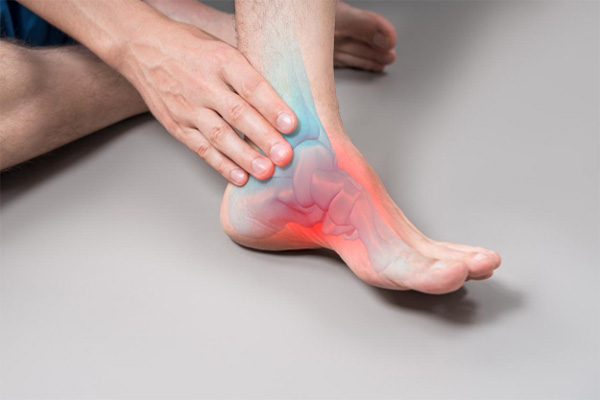
When ankle arthritis makes every step painful, the question is no longer simply how to manage discomfort. It becomes whether replacing the damaged joint could restore motion and preserve the way you walk. Total ankle replacement can be an effective option for carefully selected patients, but age alone does not determine candidacy. The condition of the joint, bone, alignment, activity level, and overall health all matter. Here is what determines candidacy.
Understanding Total Ankle Replacement
Total ankle replacement, also called total ankle arthroplasty, replaces damaged surfaces of the ankle joint with artificial components designed to relieve pain while preserving joint motion. Unlike ankle fusion, which eliminates movement at the arthritic joint, replacement is intended to maintain mobility and support a more natural walking pattern.
The procedure is primarily considered for people with severe or end-stage ankle arthritis whose symptoms have not improved adequately with nonsurgical treatment. The underlying arthritis may result from osteoarthritis, rheumatoid arthritis, or previous ankle trauma. Ankle arthritis is particularly likely to develop after significant injuries, making post-traumatic arthritis an important consideration in younger and middle-aged patients as well.
Severe Ankle Arthritis Is Usually the Starting Point
The first question is whether the ankle joint has deteriorated enough to justify replacement.
Patients considered for ankle arthroplasty typically have advanced cartilage loss accompanied by symptoms such as:
- Persistent ankle pain
- Significant stiffness
- Difficulty walking
- Reduced ability to participate in daily activities
- Pain that interferes with exercise or recreation
- Symptoms that continue despite conservative treatment
Treatment usually begins with nonsurgical measures such as activity modification, medications, physical therapy, bracing, and injections when appropriate. When these approaches no longer provide adequate relief, surgery may become a consideration.
Importantly, having arthritis on an X-ray does not automatically mean that an ankle replacement is necessary. The severity of symptoms and their impact on everyday life are equally important.
Is Your Bone Quality Good Enough for Ankle Replacement?
Bone quality plays an important role in determining whether an implant can be supported successfully.
Good bone stock is generally considered favorable for total ankle replacement. Poor bone quality, significant bone loss, or certain deformities can make replacement more challenging and may shift the balance toward another procedure, such as ankle fusion. The evaluation therefore goes beyond simply confirming arthritis.
Imaging studies, including X-rays and sometimes MRI, help the surgeon understand the condition of the joint, surrounding bone, alignment, and other structures before recommending treatment.
Alignment and Deformity Can Affect Candidacy
The ankle needs appropriate alignment for a replacement implant to function properly. Significant deformity can complicate implantation and may influence which procedure is most appropriate.
This does not necessarily mean that every patient with some degree of deformity is automatically excluded. Modern foot and ankle surgery can address a variety of complex conditions, but the extent of the deformity and the overall condition of the ankle must be evaluated individually.
A comprehensive assessment can determine whether the alignment can be appropriately managed as part of the reconstruction or whether another approach would provide a more predictable result.
Your Activity Level Matters More Than Your Age
One common misconception is that total ankle replacement is only for older adults.
In reality, age is only one factor in determining candidacy. Activity demands matter considerably. Ankle replacement is generally better suited to patients who want to maintain lower-impact activities such as walking, cycling, swimming, or golf rather than activities involving repeated high-impact loading.
Someone who wants to remain active without placing excessive repetitive stress on the implant may be a better candidate than a younger patient whose lifestyle involves frequent high-impact sports.
The goal is not simply to choose a procedure based on chronological age. It is to match the procedure to the patient's joint condition, expectations, and long-term activity goals.
Overall Health and Weight Can Influence the Decision
Total ankle replacement is a major surgical procedure, so overall health matters.
Patients generally benefit from having medical conditions appropriately managed before surgery. Healthy circulation is important for healing, and active infection can make joint replacement inappropriate until the infection has been resolved. Weight management may also be recommended because excess body weight increases the mechanical demands placed on the ankle.
Smoking and other factors that can interfere with healing should also be discussed during the preoperative evaluation.
These considerations do not necessarily mean someone cannot undergo ankle replacement. Instead, they may identify issues that should be addressed before surgery.
When Ankle Fusion May Be a Better Option
Total ankle replacement is not automatically preferable to ankle fusion.
Fusion permanently eliminates motion at the arthritic joint, but it can provide reliable pain relief and stability, particularly for certain patients with severe arthritis, deformity, high physical demands, or poor bone quality. Ankle replacement, by comparison, is designed to preserve motion.
The decision should therefore involve a detailed discussion of the advantages and limitations of both procedures. The best operation is the one that fits the patient's anatomy, symptoms, activity goals, and long-term expectations.
What Happens Before Deciding on Surgery?
Determining candidacy starts with a detailed evaluation rather than a single imaging test.
A foot and ankle specialist will typically review your medical history, previous injuries or surgeries, current symptoms, activity level, and response to conservative treatment. A physical examination evaluates ankle motion, strength, stability, alignment, and surrounding structures. X-rays and other imaging may then help define the extent of joint damage.
This process is particularly important because ankle arthritis can have different causes and presentations. A personalized evaluation helps determine whether continued conservative treatment, ankle replacement, fusion, or another joint-preserving procedure makes the most sense.
Could Total Ankle Replacement Help You Stay Active?
For the right patient, preserving ankle motion can be an important advantage. Maintaining movement may support a more natural gait and make everyday activities more comfortable compared with a fused joint. Current treatment approaches have made ankle replacement increasingly predictable for appropriately selected patients.
Recovery still requires patience. Patients generally progress through protected weight-bearing, gradual rehabilitation, and physical therapy before returning to normal daily activities and lower-impact recreation. Strength, flexibility, and function can continue improving for months after surgery.
Frequently Asked Questions
Am I too young for a total ankle replacement?
Not necessarily. Age alone does not determine candidacy. The severity and cause of arthritis, bone quality, alignment, overall health, and activity level all influence whether ankle replacement is appropriate. Younger patients with substantial post-traumatic arthritis may still be evaluated for replacement depending on their individual circumstances.
How bad does ankle arthritis have to be for a replacement?
Total ankle replacement is generally considered for severe or end-stage arthritis causing significant pain and functional limitations after nonsurgical treatments have failed to provide sufficient relief. Imaging and clinical symptoms are evaluated together when determining whether surgery is appropriate.
Is ankle replacement better than ankle fusion?
Neither procedure is universally better. Ankle replacement preserves joint motion, while fusion eliminates motion at the arthritic joint and can provide reliable pain relief. The appropriate choice depends on factors such as bone quality, deformity, activity level, arthritis severity, and individual goals.
Can I exercise after a total ankle replacement?
Many patients can return to lower-impact activities such as walking, cycling, swimming, and golf after appropriate recovery. High-impact activities may place greater stress on the implant and may not be recommended. Your surgeon can provide activity recommendations based on your recovery and implant.
How do I know if I am a good candidate for ankle replacement?
A good candidate generally has advanced ankle arthritis, adequate bone quality, no active infection or significant circulation problems, manageable alignment, and a desire to preserve ankle motion. A specialist evaluation is necessary because candidacy depends on several factors rather than symptoms or age alone.
Finding the Right Treatment for Your Ankle
Total ankle replacement can offer meaningful pain relief and preserve motion for appropriately selected patients, but it is not the right solution for every arthritic ankle. If persistent pain and stiffness are limiting your walking, exercise, or daily activities despite conservative care, a specialized foot and ankle evaluation can help determine whether replacement, fusion, or another treatment offers the best path forward.
Reference Links:
AUTHOR: Daniel M. Dean, MD – Board-Certified Foot & Ankle Orthopaedic Surgeon
Daniel M. Dean, MD is a board-certified, fellowship-trained foot and ankle orthopaedic surgeon who specializes in the comprehensive treatment of musculoskeletal conditions affecting the foot and ankle in adolescents and adults. He is dedicated to building meaningful relationships with his patients and developing personalized treatment strategies that support their individual goals, lifestyles, and long-term mobility.
Credentials & Recognition
Dr. Dean graduated with honors from the University of Notre Dame before earning his medical degree from Northwestern University. He completed his orthopaedic surgery residency at Georgetown University Hospital, followed by advanced fellowship training in foot and ankle surgery at the Mercy Medical Center - Institute for Foot and Ankle Reconstruction.
Dr. Dean has authored numerous peer-reviewed publications and has presented foot and ankle research at national and international scientific meetings, reflecting his commitment to advancing orthopaedic knowledge and improving patient outcomes.
Clinical Expertise
Dr. Dean treats a wide range of foot and ankle conditions, including total ankle arthroplasty, sports-related injuries, flatfoot deformity, complex fractures, and minimally invasive bunion correction. His approach emphasizes individualized care plans that align treatment decisions with each patient’s functional needs, recovery goals, and overall quality of life.
Medical Disclaimer: This information is for educational purposes only and does not constitute medical advice. For diagnosis and treatment recommendations, please consult with Dr. Dean.
Content authored by Dr. Daniel M. Dean and verified against official sources.


