

For many athletes, a "sprained ankle" may seem like a minor setback that requires a few days of ice and elevation. However, when the diagnosis is a high ankle sprain, the recovery timeline often stretches from days into long, frustrating months. Understanding the unique anatomy and mechanics of this injury is essential for anyone looking to return to peak performance. Let’s explore the specific reasons why high ankle sprains are notoriously slow to heal.
Anatomy of the Syndesmosis: More Than Just a Ligament
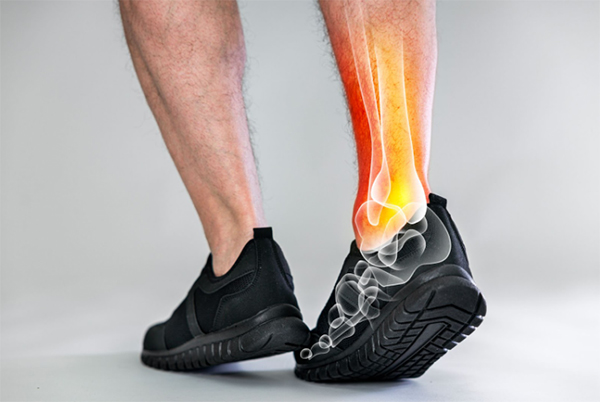
Unlike a common lateral sprain, which involves the ligaments on the outside of the ankle, a high ankle sprain affects the syndesmosis. This is a complex network of ligaments located above the ankle joint that holds the two long bones of the lower leg, the tibia (shin bone) and the fibula, together.
Because these bones are the foundation of your lower leg, the syndesmosis must withstand incredible amounts of pressure. Every time you take a step, your body weight naturally tries to push the tibia and fibula apart. The job of these ligaments is to prevent separation, keeping the ankle joint snugly aligned and stable during movement.
The Mechanism of Injury in High Ankle Sprains: High-Velocity Torque
High ankle sprains typically occur during high-impact sports like football, soccer, or basketball. The injury is often caused by extreme external rotation, where the foot is planted, and the leg turns forcefully outward. This motion wedges the talus (the ankle bone) into the space between the tibia and fibula, stretching or tearing the syndesmosis. Because this involves structural separation of the leg bones rather than just a simple roll of the foot, the tissue damage is significantly more profound.
Why the Healing Clock Ticks Slower with High Ankle Sprains
There are three primary reasons why these injuries demand patience:
- Constant Tension: Every time you stand or walk, the downward force of your weight creates a "wedging" effect that stresses the healing ligaments. It is very difficult to completely offload the syndesmosis without strict immobilization.
- Blood Supply: Ligaments, in general, have a limited blood supply compared to muscles. The syndesmosis, tucked between dense bone, receives even less, which slows the cellular repair process.
- Stability Requirements: For the ankle to function, the gap between the tibia and fibula must be precise. Even a few millimeters of "widening" can lead to long-term instability and early-onset arthritis, meaning we cannot rush the stabilization phase.
Navigating the High Ankle Sprain Recovery Process
Treatment for a high ankle sprain is a marathon, not a sprint. It often begins with a period of non-weight bearing in a boot or cast to allow the bones to "knit" back together. Once the initial healing begins, physical therapy focuses on restoring proprioception (balance) and strengthening the calf and peroneal muscles to provide secondary support to the joint.
In severe cases where the gap between the bones is too wide, surgical intervention, such as Lateral Ankle Ligament Repair, may be necessary to mechanically hold the bones in place while the ligaments mend.
Protecting Your Long-Term Mobility
Ignoring a high ankle sprain or returning to play too early can lead to chronic instability and permanent changes in how you move. If you have experienced a forceful twisting injury and notice pain higher up the leg than a typical sprain, book an appointment with Dr. Dean for an expert evaluation.
AUTHOR: Daniel Dean, MD is a board-certified and fellowship-trained foot and ankle orthopaedic surgeon. He treats all musculoskeletal pathologies of the foot and ankle in adolescent and adult patients. He has specialized training in total ankle arthroplasty, sports injuries, flatfoot, complex fractures, and minimally invasive techniques in bunion correction.


